AI Workflow Systems · Workplace project
How should a request be framed and tested so that generation → review → feedback reduces delivery uncertainty?
I contributed to brief analysis, requirement framing, workflow development and testing for AI-assisted content production. This public account is limited to workflow-level decisions; it does not claim ownership of model selection or internal architecture.
Decision Context
When the request is unclear, direct generation only moves uncertainty downstream.
Content production moves through topic selection, source material, generation, editing, feedback and delivery. Unless the brief is first divided into reviewable stages, each failure remains difficult to locate: was it caused by the request, the process or the output?
Question / Alternatives
Frame the brief first, or generate first?
Generate directly
Skip requirement framing and produce a first draft quickly. The trade-off is poor traceability across failures, versions and review feedback.
Build a testable workflow
First define tasks, boundaries and acceptance criteria, then connect generation, review and feedback.
My role
I contributed to brief analysis and requirement framing, and supported workflow development, testing and cross-team coordination.
Evidence / Validation
Keep generation, review, feedback and delivery in one traceable process.
Process framing
Mapped the business question, task inputs, review points and completion criteria.
Visible failure
Generation failure, empty retrieval and failed synchronisation remain explicit states rather than being presented as success.
Feedback loop
Review comments and new material become structured proposals for the next iteration.
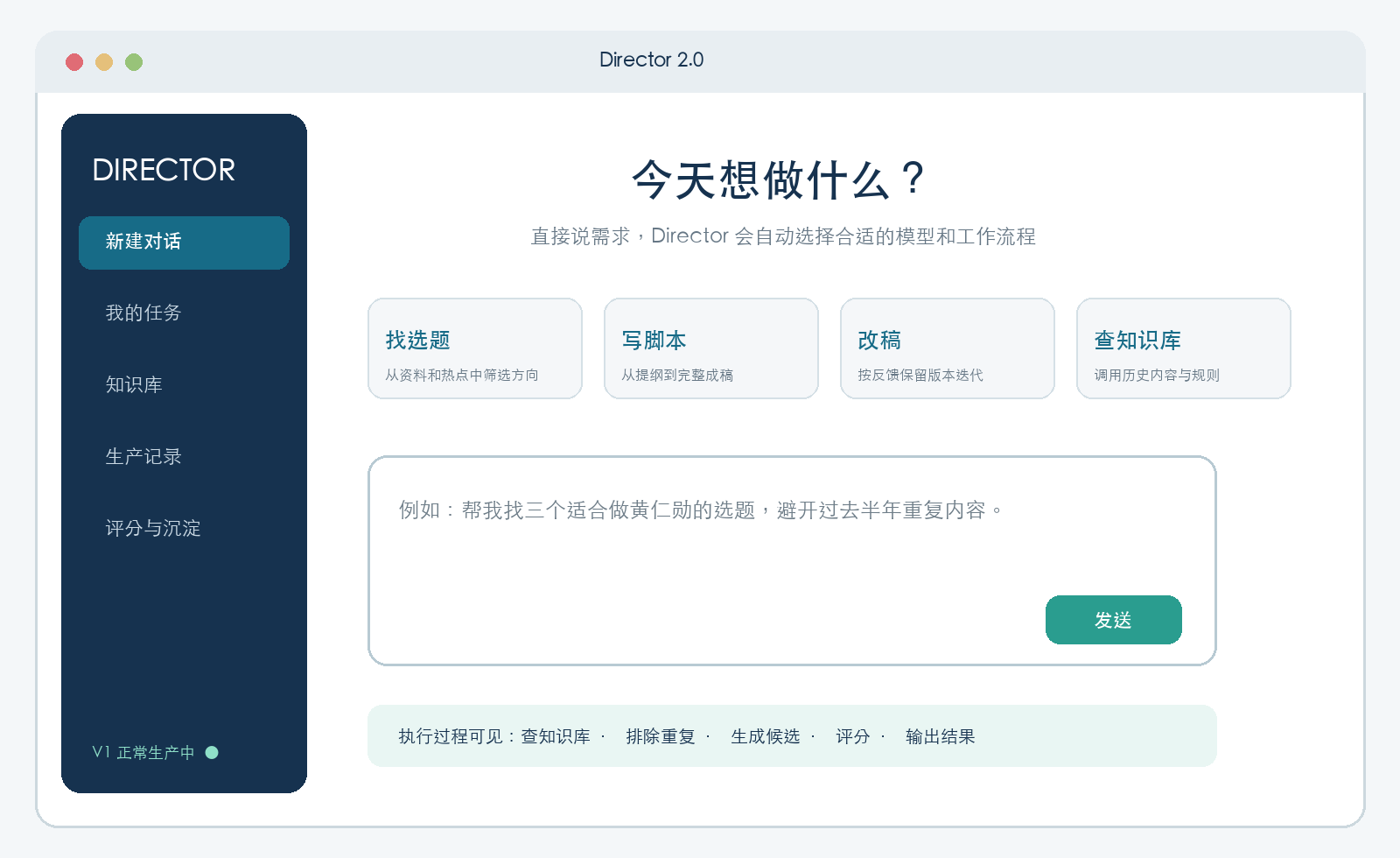
Redacted concept: entry points and task framing.
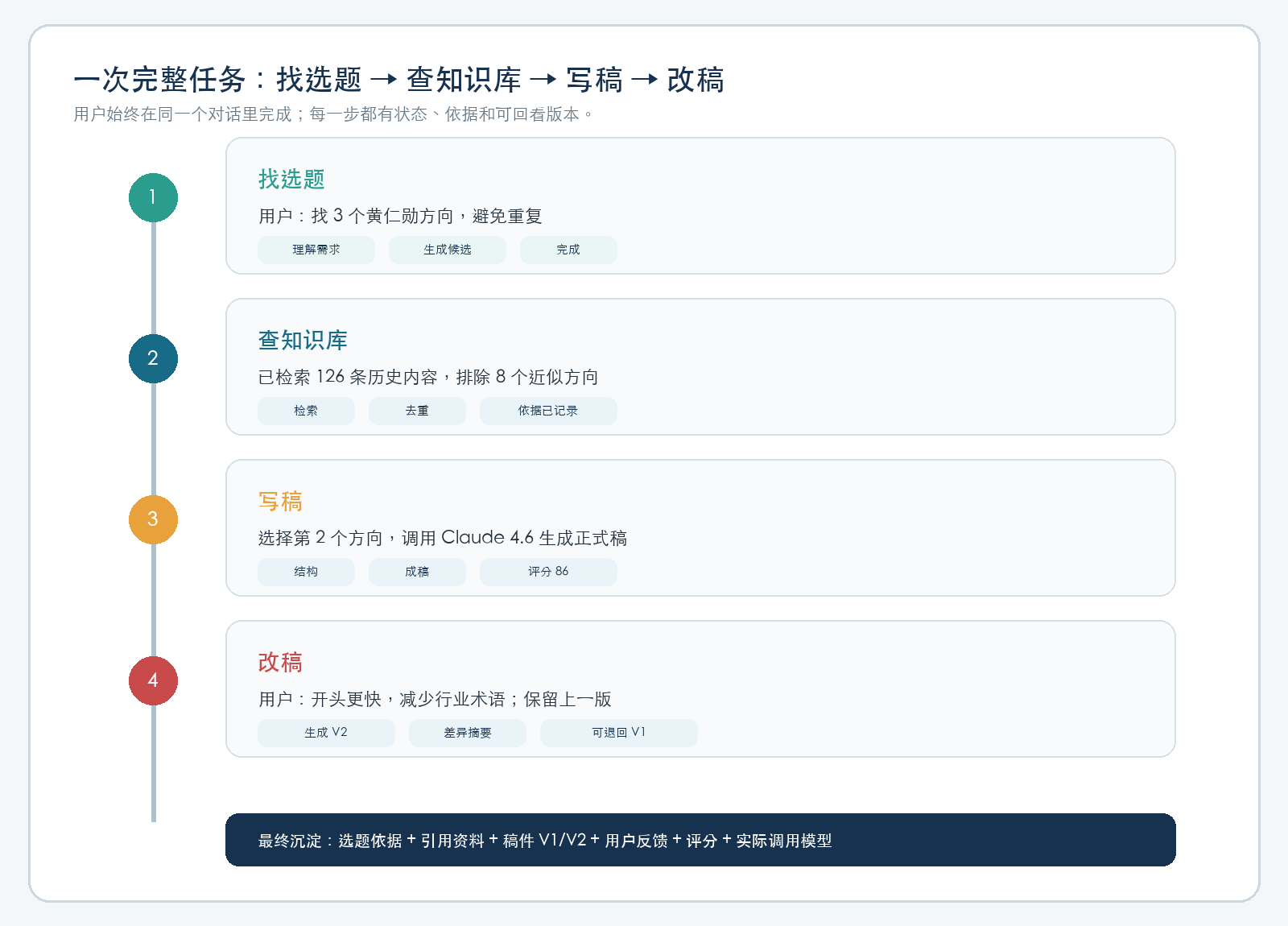
Redacted concept: source material, generation, review and delivery.
Recommendation
Turn the request into a testable workflow before building further.
Do not skip the brief and generate immediately. Define the input, boundary, review method and completion criteria for each stage, then test whether the process actually reduces delivery uncertainty.
Boundary / What we cannot claim
This was workflow-level participation, not ownership of model selection.
Decision Impact / Next Action
The next step is to develop evidence that can be shared.
Retain
Continue documenting methods for brief framing, review points and explicit failure states.
Still to validate
There is not yet public quantitative evidence that the workflow reduced delivery time, rework or quality risk.
Public boundary